Apps Development Cost for Mobile and Web Projects
Understand apps development cost, complexity tiers, team rates and hidden expenses, with practical UK budget examples for SMEs and organisations.
In this article
- Why App Development Quotes Differ So Much
- What estimates hide
- Understanding App Complexity Tiers
- Simple tier
- Medium tier
- Complex tier
- Breaking Down Every Major Cost Component
- Discovery and design
- Engineering and quality assurance
- Deployment, compliance and maintenance
- Choosing the Right Pricing Model
- Fixed price
- Time and materials
- MVP first
- What UK Team Rates Reveal About Budgets
- The in-house cost floor
- Why role mix matters more than headcount
- Building Realistic App Budget Examples
- Simple MVP scenario
- Medium production scenario
- Complex operational scenario
- Reducing Costs Without Cutting Quality
- A sequence that protects the budget
- Build a Three-Year ROI Checklist
- Your three-year checklist
UK apps development cost broadly runs from roughly £15,000 to £500,000 or more, with a narrow MVP at the low end and a production-grade mobile or web application costing materially more once post-launch costs are included. That's why a useful estimate doesn't start with a headline price. It starts with what the app must do, who can access it, what data it touches and what it'll cost to keep running.
You're probably looking at wildly different quotes for what sounds like the same idea and wondering which supplier has misunderstood you. In most cases, none of them have. They're pricing different products under the same short brief, and the gap tells you more about their assumptions than about their honesty.
Why App Development Quotes Differ So Much
An SME asks three suppliers to price a customer portal. One prices a login, a list of documents and a contact form. Another prices role-based access for head office and site managers, downloadable reports and a live feed from operational systems. The third prices all of that plus security testing, accessibility work and support after launch.
All three call it a portal. Only one of those scopes would survive contact with real customers.
Screen count is a poor proxy for cost. A single sign-in screen can be trivial or expensive depending on password recovery, multi-factor authentication, permissions and audit trails. Payments, reporting and integrations work the same way. Each boundary you cross into another system adds engineering, testing and failure handling.
What estimates hide
The UK Government app developer survey of 600 developers with 20 in-depth interviews, published in December 2024, found expenditure extends beyond programming to familiarisation, process scoping and legal advice. Among developers aware of the relevant app-security code, mean costs included £7,143 for familiarisation, £18,882 for scoping, development, testing and implementation and £4,374 for legal costs. A quote that omits that work isn't cheaper. It's incomplete.
| Estimate element | Why it affects cost | Question to ask |
|---|---|---|
| User roles | Each role multiplies permission and test combinations | Which roles are included in release one? |
| Integrations | Every API needs contracts, error handling and monitoring | Which systems, and who owns the API? |
| Data sensitivity | Personal or payment data triggers added controls | What data categories have you assumed? |
| Launch obligations | Store approval, support and patching continue after go-live | What's included after launch, and for how long? |
Don't compare totals until suppliers price the same outcomes, exclusions and acceptance criteria. Put those in writing first. Quotes converge quickly once everyone prices the same product.
Understanding App Complexity Tiers
Think of buying a vehicle. A small van, a configurable fleet vehicle and a specialist operational truck all get called vehicles, but you wouldn't budget for them the same way. Apps work identically. The label tells you almost nothing. The workload tells you everything.
Simple tier
A simple app has one core workflow, limited screens and little or no integration with other systems. A booking form, a content app or an internal checklist tool fits here. There's minimal backend logic, one user type and no sensitive data worth speaking of.
Medium tier
Medium complexity starts when you add user accounts, a proper backend and third-party services. Payments through a provider such as Stripe, push notifications, file uploads and a CRM integration all sit here. You now have data to protect, sessions to manage and external systems that can fail.
Complex tier
Complex apps carry operational weight. Real-time synchronisation, multi-site permissions, advanced security, substantial reporting and compliance requirements push you into this tier, even if the visible screens look plain.
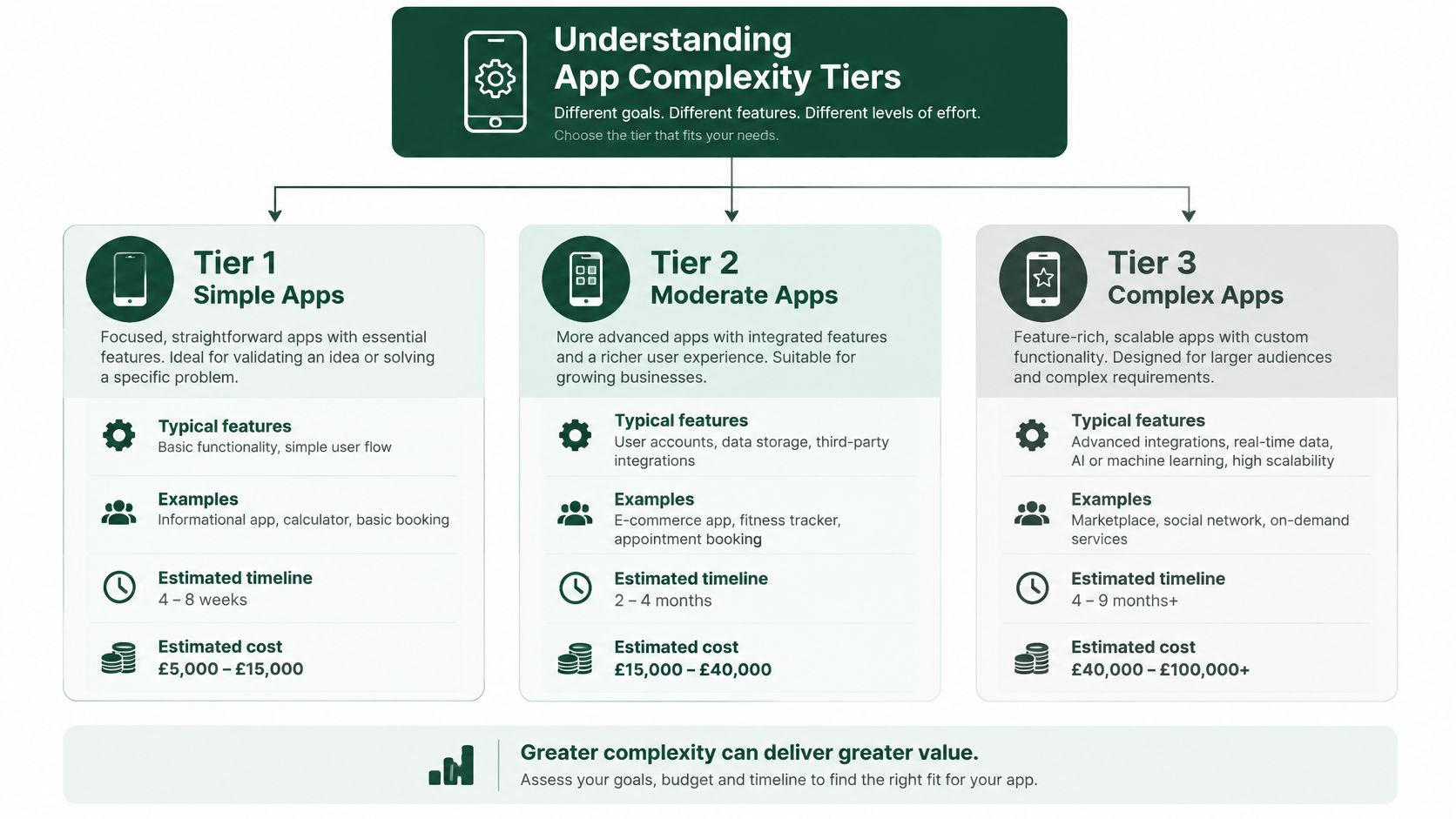
The pricing follows the tier, not the pitch. One UK estimate in Foresight Mobile's UK app cost guide places a simple MVP at approximately £15,000 to £40,000, medium-complexity apps with accounts, payments, a backend and integrations at approximately £40,000 to £80,000, and enterprise apps with advanced security or compliance above £80,000.
Multi-site permissions are the classic tier-jumper. A dashboard for one site is a report. A dashboard where head office sees everything, site managers see their own site and auditors see read-only history is a permission system, a testing matrix and a support burden.
Classify your app by workflows, data and integrations before you ask for a price. If you can't place it in a tier, your brief isn't ready for quoting.
Breaking Down Every Major Cost Component
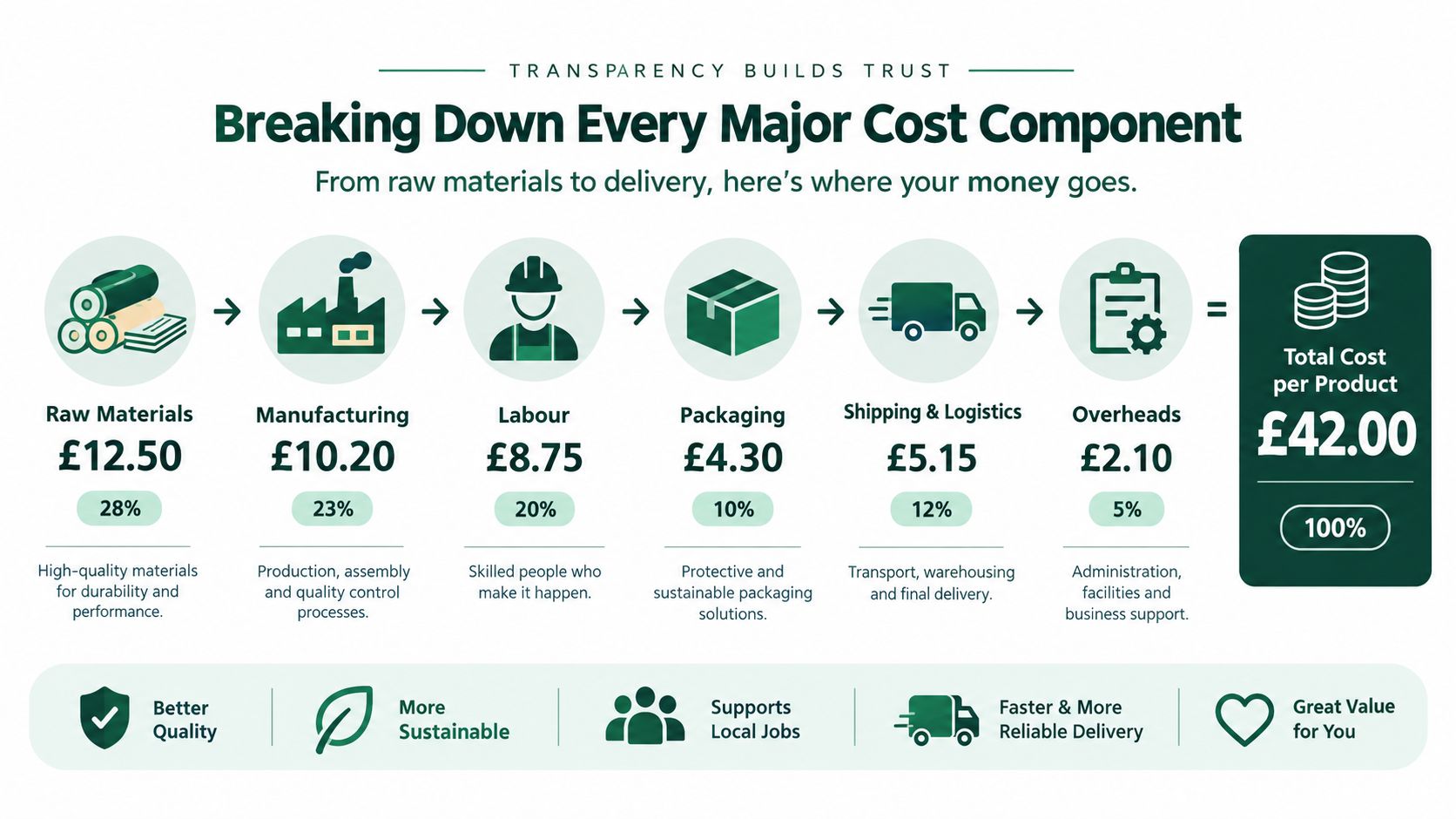
Buyers often treat development as the product and everything else as padding. That's backwards. Coding is the middle of the lifecycle, and the stages around it determine whether the coding was worth paying for.
Discovery and design
Discovery defines outcomes, user journeys, data sources and release boundaries. You should get wireframes, a prioritised feature list, integration notes and acceptance criteria out of it. Skip it and you'll pay for the same decisions later, mid-build, at engineering rates.
UX and interface design turns those decisions into screens users can move through without training. For a portal, that includes empty states, error states and what a site manager sees when data hasn't arrived yet. Those unglamorous screens are where support tickets are born or prevented.
Engineering and quality assurance
Frontend work builds what users touch. Backend work builds accounts, permissions, APIs, reporting logic and integrations with systems such as payment providers, CRMs or operational databases. Every additional API contract and permission combination expands the test surface.
QA isn't a final check. Testers verify that a customer can't see another customer's reports, that exports match source data and that a failed integration doesn't silently produce wrong figures. Data migration from spreadsheets or legacy systems belongs here too, and it's routinely underestimated.
Deployment, compliance and maintenance
Deployment covers hosting setup, monitoring, backups, app-store submission and operational handover to whoever supports the system. None of it's optional for a production app.
Compliance sits across all stages, not at the end. UK estimates in Red Eagle Tech's UK app development cost breakdown place initial GDPR-related work at approximately £3,000 to £7,000, recurring annual work at approximately £1,500 to £5,000, and launch support, testing cycles and rejection handling at approximately £1,500 to £3,000, varying with data and risk profile.
Budget each stage as a line with named outputs. If a supplier can't tell you what discovery produces or what QA covers, you're not looking at a breakdown. You're looking at a number.
Choosing the Right Pricing Model
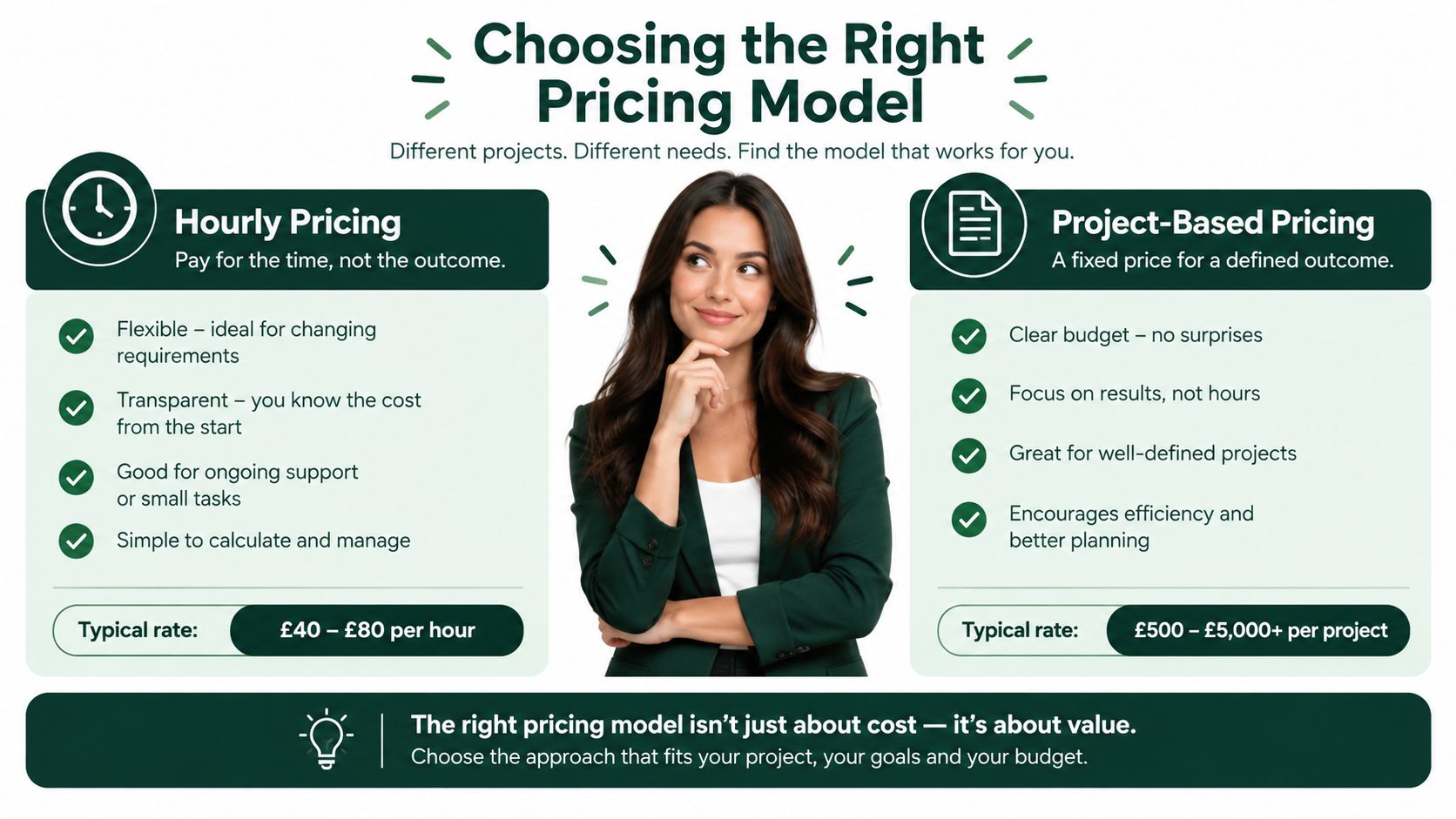
The pricing model decides who carries the risk when reality disagrees with the brief. Price predictability, flexibility and accountability trade against each other, so match the model to your uncertainty rather than to the lowest opening figure.
Fixed price
Fixed price suits a well-defined, stable scope, such as an internal tool with known users and fixed reports. You get budget certainty, but every ambiguity becomes either a contingency in the price or a change request later. It only works when acceptance criteria are written tightly enough that both sides can point at them.
Time and materials
Hourly or daily billing suits products where requirements must evolve through user feedback. You keep flexibility and pay for actual effort, but you carry the overrun risk. Control it with a capped budget per release, weekly reporting against outcomes and a change process you enforce consistently.
MVP first
An MVP approach suits organisations validating demand before a larger commitment. You fund the smallest useful release, measure adoption, then decide. It isn't a discount model. It's a sequencing model, and it fails if the MVP is built so cheaply that it must be thrown away.
- Choose fixed price when scope is stable, integrations are documented and success criteria are measurable.
- Choose time and materials when you'll learn from live users and need freedom to reprioritise.
- Choose MVP first when the business case depends on unproven user behaviour.
Whichever model you pick, require a written scope, acceptance criteria, change control and a named owner for post-launch work. The model doesn't remove risk. It only decides where the risk sits.
What UK Team Rates Reveal About Budgets
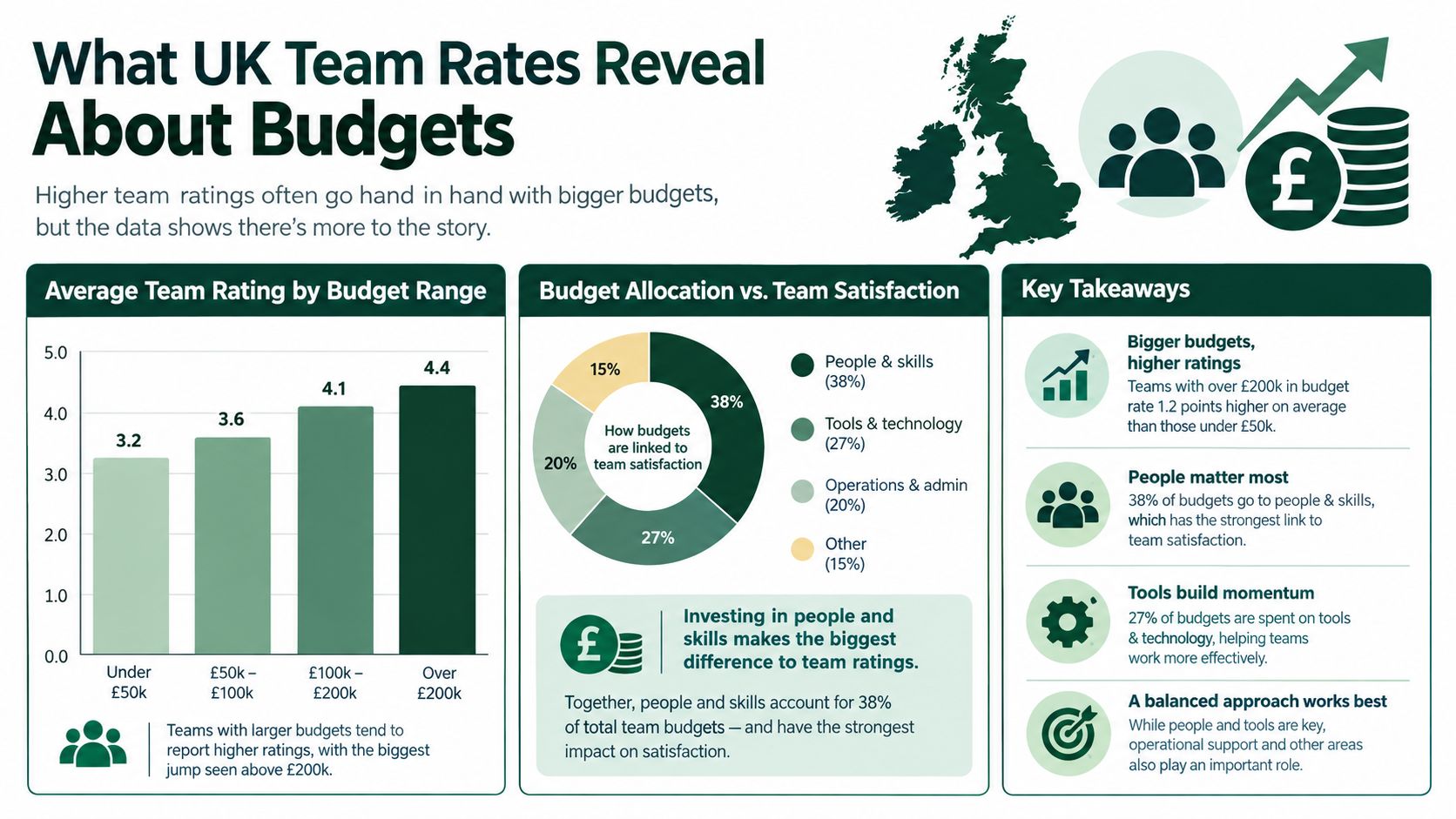
Labour is where app budgets become arithmetic. Once you know who is on the team and for how long, the plausible cost range narrows fast, whatever a sales page promises.
The in-house cost floor
Job vacancies data in IT Jobs Watch mobile developer salary data for England recorded a median annual salary of £66,250 for mobile application developers in the six months leading to 17 August 2025. A three-person team at that median represents approximately £198,750 in annual base salaries before overheads, and a four-person team about £265,000.
Base salary isn't total cost. Employer National Insurance, pensions, recruitment, laptops, software tools, management time and office overhead all sit on top. An in-house team also keeps costing money between releases, which is fine if you have a continuous product roadmap and wasteful if you don't.
Why role mix matters more than headcount
A credible team usually needs more than developers. Product management prioritises, UX design prevents unusable workflows, QA protects data integrity and someone must own security and delivery. Substituting one generalist for all of that doesn't remove the work. It concentrates the risk in one diary.
Seniority cuts both ways. Senior engineers cost more per day and typically make fewer expensive architectural mistakes, write less code that needs rewriting and spot integration problems earlier. Junior-heavy teams look cheaper on a rate card and often aren't by launch.
Practical rule: ask every supplier to name the roles, seniority and allocation behind their price. A quote you can't decompose into people and time is a quote you can't challenge.
Duration is the multiplier people forget. A small team retained for twice as long costs roughly twice as much, so delays in decisions, data access and sign-off are budget items even when no invoice labels them that way.
Building Realistic App Budget Examples
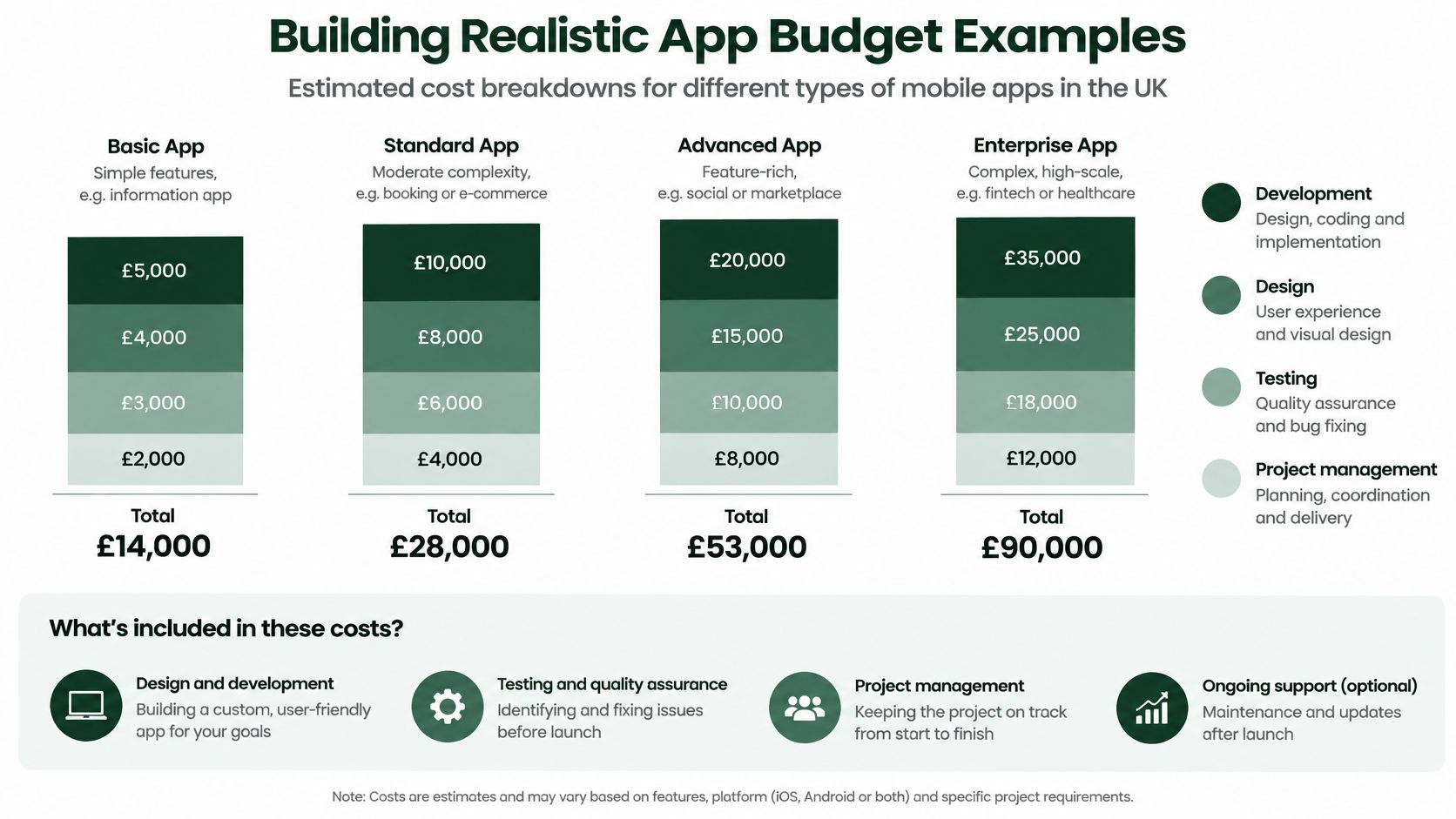
Examples only help if you copy the structure, not the totals. Build each scenario from tier, team and recurring obligations, then adjust for your own data and integrations.
Simple MVP scenario
A tightly scoped first release with one workflow, basic accounts and downloadable reports sits in the simple-to-medium range covered earlier. For a waste and recycling customer portal, that could mean authenticated reporting, collection updates and CSV or PDF exports. Nothing real-time, no payments, one customer role.
Medium production scenario
Add multi-site dashboards, role-based access for head office and site staff, notifications and an integration with operational collection data. You've now bought a permission model, more API contracts and a larger testing matrix. The screens barely changed. The budget category did.
Complex operational scenario
Add automated ESG calculations, audit-ready evidence trails, advanced security review and integrations with customer systems. This is enterprise territory because the cost driver is assurance. A wrong carbon figure in a board report is a business problem, not a bug to patch behind the scenes.
Staffing arithmetic keeps these scenarios honest. UK benchmarks in Salary.com UK software developer salary data place average software-developer salary at about £66,427 annually, roughly £32 per hour before employer overheads, while mid-to-senior contractor benchmarks are approximately £500 to £600 per day. A 120-person-day engineering requirement therefore implies about £60,000 to £72,000 before product management, UX, QA, security and contingency.
That single calculation explains many quote gaps. If one supplier's total is below the plausible engineering cost alone, they've assumed less work, cheaper staff or excluded stages you'll pay for separately.
Separate every example into three buckets before you approve it. Build cost for release one, deferred cost for later features and operating cost for hosting, monitoring, patching and support. Mixing them produces a number that can't be managed.
Reducing Costs Without Cutting Quality
Cost control comes from clarity and sequencing, not from squeezing day rates. The cheapest work is the work you never commission, followed by the work you only do once.
Narrow the first release. Ship authenticated reporting and exports before automated calculations and external integrations. Each deferred integration removes API contracts and test combinations from release one while keeping the architecture able to grow.
Standardise data early. Agree definitions for core metrics, such as waste-stream categories, collection events and certificates, before design starts. Reusable components for metrics, reports and ESG exports only reduce duplicated work if every customer and site uses the same definitions underneath.
Pick the right delivery form. Where native device features are limited, a cross-platform mobile app or responsive web portal paired with one central API usually beats separate native builds. Don't pay twice to reach the same users through the same workflows.
A sequence that protects the budget
- Define outcomes first, in measurable terms such as reports downloaded or service queries deflected.
- Prioritise must-have workflows and park everything else in a named later release.
- Map data and integrations so suppliers price real interfaces, not guesses.
- Write acceptance criteria per workflow, including permission and export rules.
- Test assumptions cheaply with prototypes before committing engineering time.
Cutting discovery or compliance doesn't save money. It moves the cost into rework, launch delays and fixes under pressure, where everything is priced worse.
Insist on a disciplined change process as well. Every mid-build addition should show its cost, its effect on the launch date and what it displaces. Teams that see the trade-off in writing make calmer decisions than teams that discover it in an invoice.
Build a Three-Year ROI Checklist
The lowest build quote regularly produces the highest three-year cost. Postponed maintenance becomes forced upgrades, unsupported integrations break on someone else's schedule and cheap architecture gets rebuilt at full price.
One UK estimate in Softomate Solutions UK mobile app development cost guidance places annual maintenance at 15 to 25 percent of the original build cost, so a £50,000 app equals £7,500 to £12,500 each year before hosting, analytics, payment, messaging, database and other usage-based services. Model three years, not one invoice.
Your three-year checklist
- Scope and acceptance: Which workflows, roles and reports are included, and how is done defined?
- Data and risk: What personal, payment or operational data is handled, and is a DPIA or penetration test required?
- Integrations: Who owns each API, and what happens when it changes or fails?
- Accessibility and security: What standard are you building to, and who verifies it?
- Operations: Who hosts, monitors, patches and supports the app, at what recurring cost?
- Reporting and renewal: Which usage and cost reports will you get, and what are the exit and data-export terms?
Compare options on total cost against measurable benefit. A lean MVP that customers use for reporting beats a feature-rich portal nobody logs into, and a production app that removes manual report production can justify higher operating cost. State the benefit in operational terms your finance team can test, such as hours saved, queries avoided or audit preparation shortened.
Ask every vendor for the same three-year model covering maintenance, infrastructure, security updates, third-party services, store fees, support and planned changes. Suppliers who can produce it understand ownership. Suppliers who can't are quoting you a launch, not a product.
If your app idea is really about giving customers clear, auditable waste and recycling data without the reporting headache, Gegan already provides a customer portal with service updates, waste metrics and downloadable reports as part of its UK waste and recycling management service. Talk to the team about a compliant, data-led waste system for your sites before you commission software to solve a problem a managed partner can handle for you.